


Ten Things to Remember when Presenting Montessori Activities
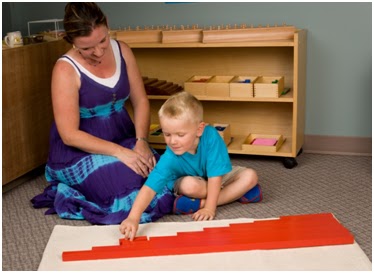
Becoming a Montessori teacher can seem overwhelming at times. There are so many lessons and activities to give, new materials to master, daily observations to record, getting used to a multi-age classroom, and learning to work with an assistant or co-teacher. When it comes down to it, the most important element is how you present lessons and interact with the children.
Here are some tips to remember when presenting Montessori lessons and activities:
Ten Important Things to Remember When Presenting Montessori Activities
Invite the child to participate.
As simple as this seems, there is a world of difference between being invited to work and being told to do it.
Maintain eye contact when inviting or speaking to the child.
This respectfully tells the child that he has your undivided attention. In return, the child’s eyes tell you that the child is ready to learn.
Show, not tell.
Use the fewest number of words possible during presentations. The child’s focus should be on the materials and the presentation, not on your words.
Present from left to right, top to bottom.
All presentations move in this direction as an indirect preparation for reading and writing western script.

Sit on the child’s dominant side.
This way the child can watch and copy your exact movements. This might mean you need to learn how to present activities with your non-dominant hand!
Use slow, deliberate movements.
Although you may have done this presentation 100 times, it is brand new to the child. Slow down so he can watch your exactness.
Repetition increases success.
The child will not perform the activity with 100% accuracy the first time. Encourage them to use the materials repeatedly to increase their mastery.
Use the three-period lesson: This is. Show me. Tell me.
Children need repeated exposure to new vocabulary to make it part of their repertoire. When presenting new vocabulary and concepts, use the three-period lesson to ensure that the child understands the term and can connect it successfully with its corresponding object.
Stop and put it away.
If the child is not interested or is making mistakes, put the activity away. There will be another opportunity to present it later. Stop before you and the child become frustrated.
Smile and Relax.
Watching children develop and learn is a joyful experience!


